

This month, the Trump administration moved further away from the failed “Housing First” approach to homelessness and addiction and toward what it calls “Treatment First”—an model centered on recovery, treatment and self-sufficiency.
That move is a sigh of relief as the prevailing Housing First model hasn’t demonstrated that it can produce lasting change. During the Obama administration, Housing First became increasingly central to federal homelessness policy, particularly around 2013, when HUD directed communities to give greater weight to permanent housing strategies. Under the Housing First model, treatment and other supportive services were offered but generally could not be required as a condition of obtaining or retaining housing.
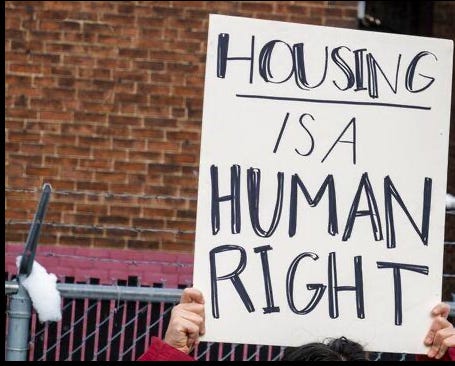
The idea is presented as not only compassionate, but as a human right: Put a roof over someone’s head first. Remove barriers. Don’t require sobriety. Don’t require treatment. Don’t insist that a person first demonstrate that he can manage the responsibilities that come with independent housing. After all, imposing such demands could add undue pressure and stress. Moreover, if housing is a human right, so the argument goes, one shouldn’t have to earn it through behavioral change anyway. Then once a person is housed, they’ll make better choices. In theory.
There is nothing inherently wrong with providing housing. The question is what is the goal of homelessness policy? Is it to get people into housing? Or is it to help the homeless develop the skills to live independently? Those are not the same thing. A policy can be compassionate in its intentions and carry the moral weight of a human right—and still fail to produce good results.
Results aren’t there
One study showed that people placed in housing reported an improvement in their quality of life. That isn’t surprising. Having a place to live is preferable to living on the street. Housing First has also received positive marks for keeping people housed. Additionally, the services offered, such as psychiatric care, basic life-skills assistance and vocational support, were also shown to be utilized, despite participation being voluntary.
But here’s the rub: utilization is a measure of engagement, not necessarily of effectiveness. Similarly, keeping someone housed is an important outcome—but it does not necessarily mean that the underlying problems contributing to homelessness have been resolved.
So what happened to the underlying challenges that caused homelessness in the first place? A review of randomized trials found Housing First policies did not produce clear improvements in mental health, substance use or other outcomes associated with self-sufficiency. In other words, there was no transformation.
The more important questions are whether people experience better mental health, overcome addiction, find employment, develop responsibility and ultimately acquire the ability to live stable, self-sufficient lives.
Aren’t those the larger goals? Homelessness and drug addiction are crises of identity, not solely material problems that are solved by one material means: housing. When a person loses work, relationships, responsibility, purpose and a meaningful place in society, he can lose not only his home but his sense of who he is. He may also lack the awareness, education, positive habits and virtues necessary to rebuild a stable life. Those deficits can contribute to destructive—even violent—behavior that lands many in jail. In fact, 77% of Californians experiencing homelessness reported having been jailed at some point, and 37% reported having served time in prison.
Character transformation matters
Housing is an asset. It is not a character trait. A person can be given an apartment without acquiring the habits necessary to maintain it. He can be given food without learning how to provide for himself. He can be given medication without overcoming an addiction. He can be given a bed without acquiring the discipline required to build a stable life. A right to housing does not confer the habits, skills or character necessary to maintain a home, let alone live independently. And for many, that leaves them caught in a much larger cycle involving addiction, mental illness, incarceration, unemployment, broken relationships and destructive behavior. If the same person repeatedly cycles through homelessness, addiction and jail, what exactly is accomplished by addressing only one element of that cycle?
This is where the distinction between compassion and effectiveness becomes important. If self-sufficiency isn’t addressed, the system may move people out of homelessness temporarily without enabling them to exit permanently. The result is a revolving door, not a shrinking population.
From 2013 to 2025, homelessness in the United States homelessness increased by 27 percent. California, which has embraced Housing First principles, has seen homelessness rise 20 percent since 2019. The state accounts for about 12 percent of the nation’s population but about 28 percent of its homeless population.
Correlation does not prove causation. California’s homelessness problem has many causes, not the least of which is high housing costs, exacerbated by continued immigration into a state with a severely constrained housing supply. But the numbers should at least make us skeptical of the idea that a policy is working simply because its intentions are kindhearted. And that always seems to be the way Housing First is sold.
That’s not the case with the Human First model, whose intentions are just as compassionate, but whose approach is criticized as too conditional and coercive.
Maybe that’s a red flag in and of itself. When something sounds too good to be true, it often is. When something is packaged as “there’s nothing you have to do,” it’s worth asking: Why?
Human First takes the opposite approach. It asks something of people—and, in so doing, seeks to give them something Housing First cannot provide: agency.
The benefits of the Human First model is what I explored with my latest guest on the Culture, Religion & Technology (CRT) podcast, Tim Stay, CEO of The Other Side Academy (TOSA). The TOSA method starts from a very different premise: that lasting change requires more than providing a person with resources. It requires asking something of the person in return—responsibility, discipline, work and, ultimately, transformation.
In my next post, I’ll share my conversation with Tim and explore what happens when we move from a philosophy of housing people to one of helping people become capable of housing themselves.